
Romanian researchers have long recognized the importance of studying “Danubian Latin” by considering Latin spoken on both the north and south sides of the Danube. However, this comprehensive approach hasn’t been fully realized. Even I. Fischer, who coined the term “Danubian Latin” in his influential 1985 book, primarily focused on North-Danubian Latin (Dacia) due to the complexity of the Romanization process there and limited access to information on South-Danubian Latin (Moesia).
More recently, a chapter in a prominent synthesis on the history of the Romanian language, titled “The historical context of the Romanisation of the Daco-Moesian area,” still largely confines its discussion of Moesia to Dobruja (part of Moesia Inferior). While this is an improvement over Fischer, it still doesn’t cover the full scope of South-Danubian Latin. Ana Cristina Halichias, author of that chapter, emphasizes the need to consider Latin from the south-Danubian region, but acknowledges the topic’s complexity.
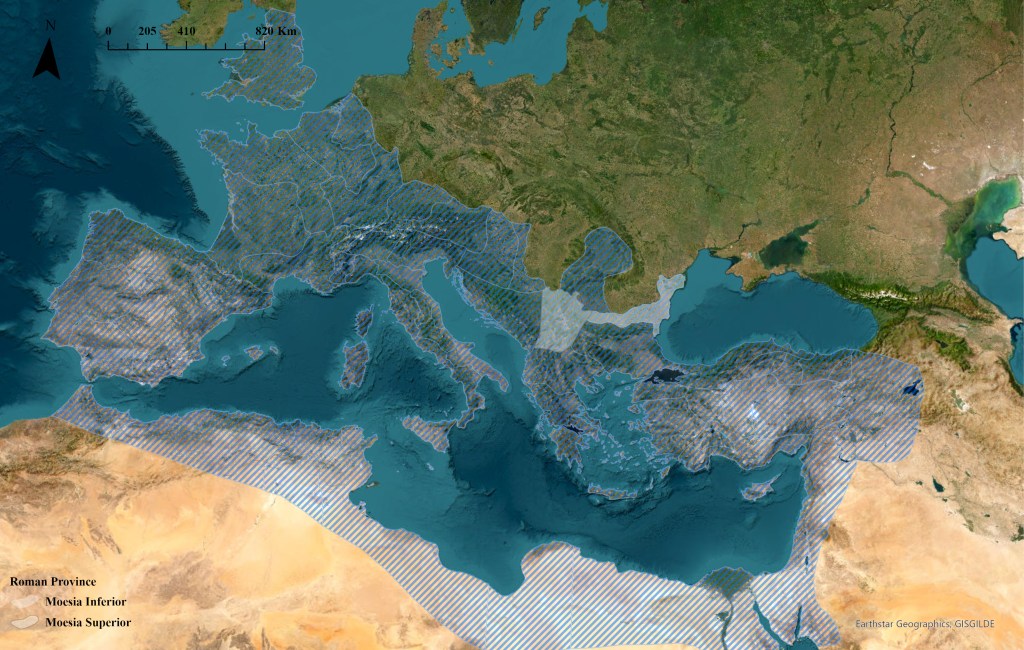
While Bulgarian scholars have contributed to understanding the characteristics of Latin in this area (mostly in Bulgarian) analyzed the phono-morpho-syntactic features of Latin in Moesia Inferior, alongside Greco-Latin interferences and bilingualism, a thorough analysis of Latin’s relationship with other languages in Moesia Inferior is still lacking.
We believe that a detailed, analytical study of South-Danubian Latin, incorporating recent advancements in the field, is crucial. This would address a significant gap in research regarding its contribution to the history of Latin in the Lower Danube area. Our research plan aims to apply methodologies used for Dacia and Dobruja (by Fischer and Halichias) to the Moesian territories. Halichias, for instance, specifically examined the relationship between Latin and Greek in Dobruja’s Hellenophone cities, a unique situation compared to Dacia.
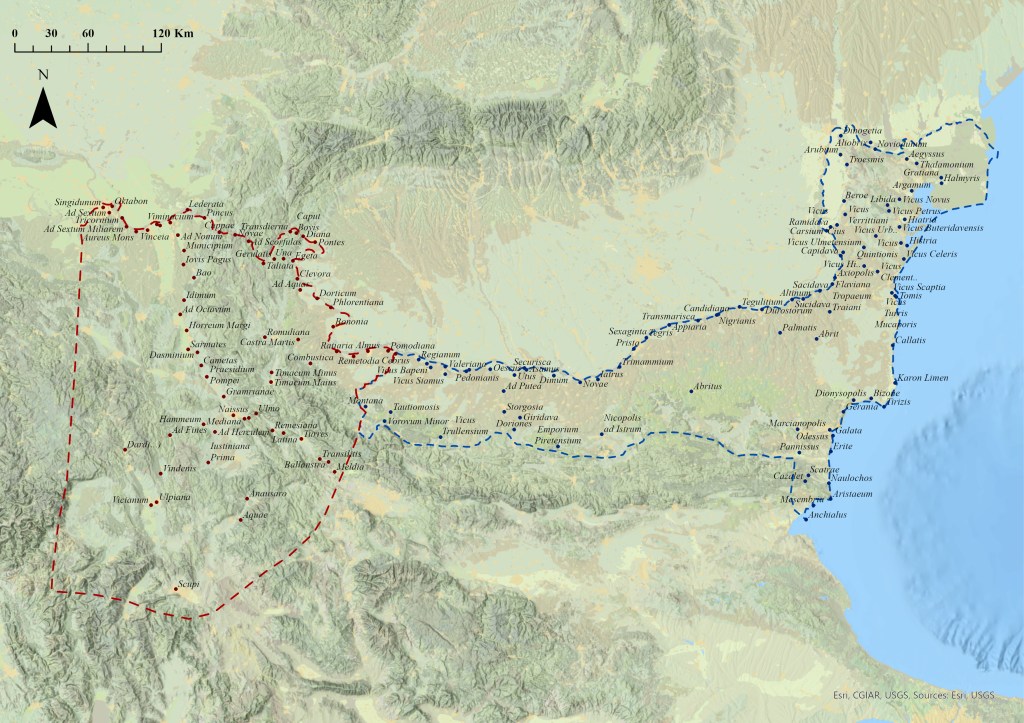
Since 1989, there’s been a significant increase in relevant bibliography concerning the historical context of Moesian territories, including Romanian monographs on military, urban, and rural life. This extensive body of work, combined with numerous articles, provides a robust foundation for a comprehensive study of Romanity and Romanization in Moesia. However, this information hasn’t been systematically interpreted from a linguistic perspective. Recent publications, including epigraphic works on Moesia Superior, also offer vital information to understand linguistic Romanization there.
Our project is fundamentally important for understanding the genesis of the Romanian language because, for the first time, it will holistically analyze linguistic Romanization across both Moesia Superior and Moesia Inferior as part of “Danubian Latin.” We aim to integrate our findings into the broader context of the Romanization process to gain a diachronic perspective compared to other provinces. Furthermore, our project’s significance lies in exploring how surviving linguistic evidence can illuminate population movements.

